
Combining unit studies with service learning projects creates an enriching educational experience that fosters both academic growth and community engagement. Unit studies allow students to dive deeply into a specific topic, while service learning projects provide real-world applications for their knowledge. Here’s how to create the perfect blend of these two powerful educational approaches.
5 Tips for Picking a Unit Study
1. Align with Interests and Passions
Choose unit studies that align with your children’s interests and passions. When students are genuinely interested in a topic, they are more engaged and motivated to learn. For example, if your child loves animals, consider a unit study on wildlife conservation.
2. Consider Current Events and Relevance
Select topics that are relevant to current events or issues in your community. This not only makes learning more meaningful but also helps students understand the importance of their studies in the real world. For instance, a unit study on renewable energy can be tied to ongoing discussions about climate change.
3. Integrate Multiple Subjects
Pick unit studies that integrate multiple subjects such as science, history, literature, and art. This interdisciplinary approach helps students see connections between different areas of knowledge. A unit study on ancient civilizations can include history, geography, art, and literature.
4. Assess Resources and Materials
Ensure you have access to the necessary resources and materials for the unit study. This includes books, videos, online resources, and hands-on materials. Look for unit studies that provide comprehensive resources or ones that you can easily supplement with your own materials.
5. Set Clear Objectives and Goals
Choose unit studies with clear learning objectives and goals. Knowing what you want your children to achieve by the end of the unit study helps in planning and assessing their progress. This can include specific knowledge, skills, or projects to be completed.
5 Tips for Adding a Service Learning Project to the Unit Study
1. Identify Community Needs Related to the Topic
Find out what needs exist in your community that are related to the topic of your unit study. This helps make the service project relevant and impactful. For example, if you are studying local ecosystems, you could participate in a community clean-up or a tree planting initiative.
2. Create a Project Plan
Develop a detailed project plan that outlines the goals, activities, timeline, and resources needed for the service project. Involve your children in the planning process to teach them organizational and leadership skills. A well-structured plan ensures that the project runs smoothly and achieves its objectives.
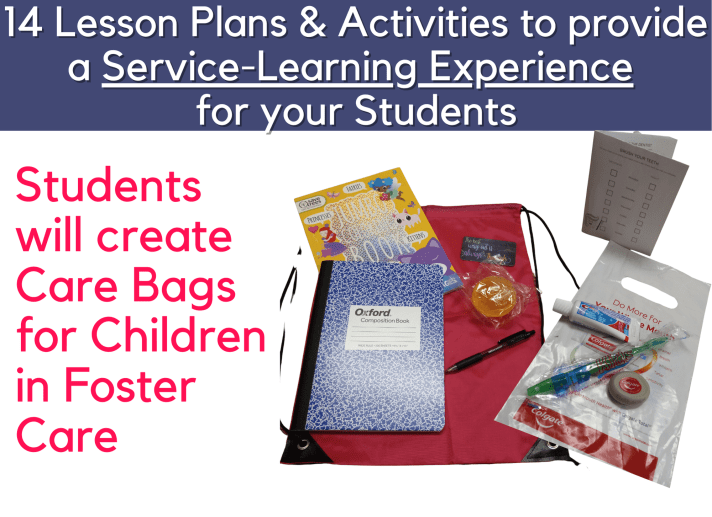
Get started with your first Service Learning Project – making care bags for children in Foster Care – click here!


3. Collaborate with Community Organizations
Partner with local organizations or community groups that are already working on similar issues. These partnerships can provide valuable resources, guidance, and support. For example, if your unit study is on food security, collaborate with a local food bank or community garden.
4. Incorporate Reflection and Assessment
Include opportunities for reflection and assessment throughout the service project. This helps students process what they are learning and understand the impact of their work. Encourage them to keep journals, participate in discussions, and present their experiences and findings.
5. Celebrate and Share Successes
Celebrate the completion of the service project and share your successes with the community. This can be done through presentations, social media posts, or community events. Recognizing and celebrating achievements reinforces the value of the project and motivates students to continue their community involvement.
Tips for Differentiation and Providing Academic Choice
Offer Varied Learning Activities
Provide a variety of learning activities to cater to different learning styles and preferences. This can include hands-on experiments, creative projects, research assignments, and interactive discussions. For example, in a unit study on the human body, offer activities such as building a model, writing a report, or conducting an experiment.
Allow Students to Choose Topics
Give students the option to choose specific topics or aspects of the unit study that interest them most. This empowers them to take ownership of their learning and increases engagement. If the unit study is on the solar system, let students choose a planet or celestial body to research and present.
Adjust the Complexity of Tasks
Differentiate tasks based on the ability and readiness levels of your students. Provide more challenging tasks for advanced learners and simpler tasks for those who need more support. For example, older students could write a detailed report on renewable energy technologies, while younger students create posters about how to save energy at home.
Incorporate Technology and Multimedia
Use technology and multimedia resources to enhance learning and provide different ways to access information. This can include educational apps, videos, virtual field trips, and online research. For a unit study on world cultures, use virtual tours of museums and historical sites.
Facilitate Group Work and Collaboration
Encourage group work and collaboration to allow students to learn from each other and develop social skills. Mixed-age group projects can be particularly effective, with older students mentoring younger ones. For a service project related to environmental conservation, create teams with members of different ages to work on various aspects of the project.
By thoughtfully selecting unit studies and incorporating service learning projects, homeschool families can create a rich, engaging educational experience that goes beyond traditional academics. These strategies not only foster a deeper understanding of the material but also instill a sense of responsibility and community in students. Through differentiation and providing academic choices, you can ensure that every child remains engaged, motivated, and excited about learning.
Get started with your first Service Learning Project – making care bags for children in Foster Care – click here!

 Teaching 4 Impact