
Service learning is a powerful educational approach that combines academic learning with community service. For teenage homeschoolers, it offers a unique opportunity to apply their knowledge to real-world issues, develop critical life skills, and make a positive impact on their communities. Planning impactful service learning projects requires thoughtful preparation and execution. Here’s a guide to help you design and implement successful service learning experiences for your teenage homeschoolers.
Understanding Service Learning
Service learning goes beyond traditional volunteerism by integrating meaningful service activities with academic learning objectives and reflection. This approach ensures that students not only contribute to their communities but also gain valuable knowledge and skills. Key components of effective service learning include:
- Connection to Curriculum: Service activities should be directly linked to academic goals and subject matter.
- Community Needs: Projects should address genuine community needs identified through research or consultation with local organizations.
- Student Involvement: Students should actively participate in planning, executing, and reflecting on their projects.
- Reflection: Regular reflection helps students process their experiences and connect them to their academic learning.
Steps to Plan Impactful Service Learning Projects
1. Identify Learning Objectives
Start by identifying the academic goals you want to achieve through the service learning project. These goals should align with your homeschool curriculum and the interests of your teenage students. For example, if you’re focusing on environmental science, your objective might be to understand local ecosystems and human impact on the environment.
2. Assess Community Needs
Next, research the needs of your community. This can involve reading local news, talking to community leaders, or collaborating with local organizations. Identify issues that align with your learning objectives. For instance, if environmental science is your focus, you might discover a need for a community garden or a local park cleanup.
3. Engage Students in Planning
Involve your teenage homeschoolers in the planning process. This not only increases their engagement but also helps them develop planning and problem-solving skills. Discuss the community needs you’ve identified and brainstorm potential projects. Encourage them to think about how they can apply their academic knowledge to address these issues.
4. Develop a Detailed Project Plan
Create a comprehensive plan that outlines the project’s objectives, activities, timeline, and resources needed. Assign specific roles and responsibilities to each student to ensure active participation. The plan should also include a reflection component, such as journaling, discussions, or presentations, to help students connect their experiences to their academic learning.
5. Collaborate with Community Partners
Building partnerships with local organizations, businesses, and community leaders can provide valuable resources and support for your project. Reach out to potential partners to discuss your project and explore opportunities for collaboration. These partnerships can enhance the impact of your project and provide students with additional learning experiences.
6. Implement the Project
With your plan in place, it’s time to execute the project. Ensure that students are actively involved in every stage, from preparation to implementation. Monitor the project’s progress and make adjustments as needed to address any challenges that arise.
7. Reflect and Assess
Reflection is a crucial component of service learning. Schedule regular reflection sessions where students can discuss their experiences, challenges, and achievements. Encourage them to think about how their service activities relate to their academic learning and personal growth. Assess the impact of the project on both the community and the students’ learning objectives.
8. Celebrate Successes
Celebrate the completion of your service learning project and the positive impact your students have made. Acknowledge their hard work and achievements through events, certificates, or public recognition. Celebrating successes not only reinforces the value of service learning but also motivates students to continue their community involvement.
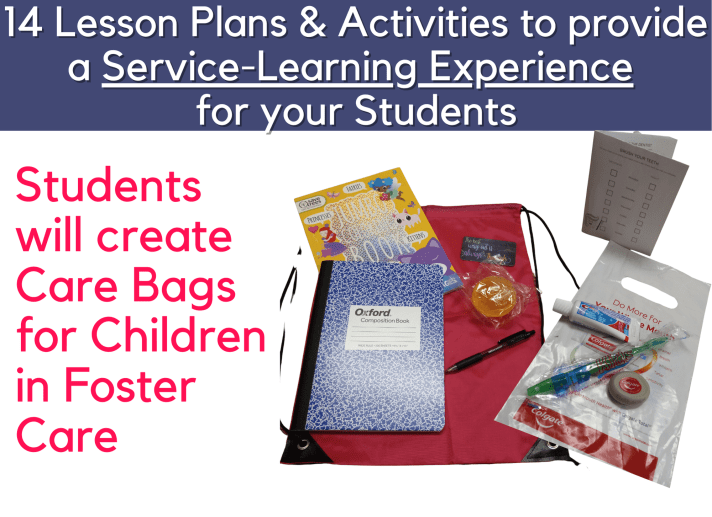
Click Here to get lesson plans to help you get started.
Example Projects for Teenage Homeschoolers
Here are some example projects that illustrate how to integrate service learning with academic objectives for teenage homeschoolers:
Environmental Science: Community Garden Project
Objective: Understand local ecosystems and sustainable agriculture.
Activities:
- Research the benefits of community gardens and sustainable agriculture practices.
- Collaborate with a local organization to establish a community garden.
- Plan and execute garden activities, such as planting, maintenance, and harvest.
- Conduct workshops to educate the community about sustainable agriculture.
Reflection: Students journal about their experiences and present their findings on the impact of community gardens on local ecosystems and food security.
History: Oral History Project
Objective: Explore local history and develop research and communication skills.
Activities:
- Research significant events and figures in local history.
- Conduct interviews with community members, including elders, veterans, or longtime residents.
- Create a documentary, website, or exhibit to share the collected oral histories with the community.
Reflection: Students discuss what they learned about local history and the skills they developed during the project, such as interviewing and storytelling.
Social Studies: Homelessness Awareness Campaign
Objective: Understand the social and economic factors contributing to homelessness.
Activities:
- Research the causes and effects of homelessness in your community.
- Partner with a local shelter to organize a donation drive or volunteer event.
- Develop an awareness campaign, including informational materials, social media posts, and community presentations.
Reflection: Students reflect on the social and economic issues surrounding homelessness and their role in addressing these challenges.
Next Steps: Download the Homeschool for Impact Guide
- Step-by-step instructions for planning service learning projects.
- Templates for project planning, reflection, and assessment.
- Examples of successful projects across various subjects.
- Tips for building community partnerships and engaging students.

Download the Homeschool for Impact Guide now and start creating impactful service learning experiences that enrich your homeschool curriculum and benefit your community.
By integrating service learning into your homeschool curriculum, you can provide your teenage students with meaningful, hands-on learning experiences that foster academic growth, personal development, and community engagement. Start planning your next service learning project today and watch your homeschoolers thrive as they make a difference in the world around them.

 Teaching 4 Impact