
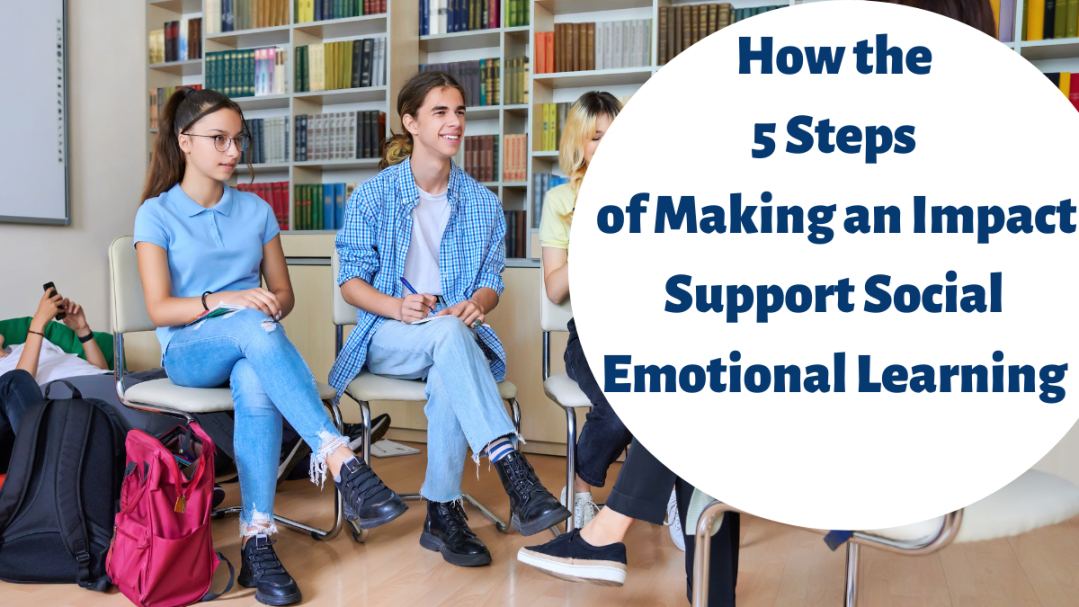
In today’s ever-changing world, cultivating social emotional skills in our youth is paramount for their success and well-being. Social emotional learning (SEL) equips students with the necessary tools to navigate life’s challenges, build healthy relationships, and make a positive impact on their communities. But how can we integrate SEL into real-world experiences that empower students to become agents of change? Enter the five steps of making an impact.
Step 1: Be Confident in Your Vision
Confidence in one’s vision is the first step towards making a difference. When students believe in themselves and their ideas, they are more likely to persevere in the face of obstacles. SEL teaches students to recognize their strengths, set goals, and develop a growth mindset. By fostering self-confidence, educators can empower students to pursue their passions and tackle issues that matter to them.
Step 2: Build a Team & Partnerships
No impactful change happens in isolation. Building a team and fostering partnerships is essential for amplifying the reach and impact of student-led initiatives. Through collaboration, students learn valuable interpersonal skills such as communication, teamwork, and empathy. SEL emphasizes the importance of cooperation and relationship-building, preparing students to work effectively with diverse groups of people towards a common goal.
Step 3: Take Action
Taking action is where ideas are transformed into tangible outcomes. SEL encourages students to be proactive and resilient in the face of challenges. By taking initiative, students develop a sense of agency and ownership over their learning experiences. Whether it’s organizing a community cleanup or advocating for social justice, students learn to navigate uncertainty and adversity while making a meaningful impact on their surroundings.
Step 4: Evaluate & Learn
Reflection is a crucial aspect of the learning process. Evaluating outcomes and learning from experiences allows students to refine their strategies and improve their effectiveness over time. SEL teaches students to analyze their actions critically, identify strengths and areas for growth, and adapt their approach accordingly. By fostering a culture of continuous improvement, educators empower students to become lifelong learners and changemakers.
Step 5: Celebrate & Appreciate
Celebrating successes and expressing gratitude reinforces positive behaviors and fosters a sense of accomplishment. SEL emphasizes the importance of acknowledging and valuing the contributions of others. By celebrating achievements, educators cultivate a supportive and inclusive learning environment where students feel valued and motivated to continue making a difference.
Integrating SEL into Service Learning
Service learning provides a powerful framework for integrating SEL into the curriculum. By combining academic content with meaningful community service, students gain real-world experience while developing essential social emotional skills. The five steps of making an impact align seamlessly with the principles of service learning, providing a roadmap for students to engage in meaningful action and reflection.
Download Teach for Impact: Guide to Start Service Learning in Your Classroom
Are you ready to empower your students to make a difference? Download our ebook, “Teach for Impact: Guide to Start Service Learning in Your Classroom,” and discover practical strategies for integrating SEL and service learning into your curriculum. With step-by-step instructions, sample lesson plans, and resources for assessment, this guide will equip you with everything you need to inspire and support your students on their journey towards becoming socially and emotionally intelligent changemakers.

Together, we can cultivate a generation of compassionate leaders who are equipped to address the complex challenges of the 21st century. Let’s embark on this journey of discovery, growth, and impact—together.
In conclusion, the five steps of making an impact provide a holistic framework for integrating SEL into service learning experiences. By fostering confidence, collaboration, initiative, reflection, and celebration, educators can empower students to become resilient, empathetic, and socially responsible individuals. Let’s harness the power of SEL and service learning to unleash the full potential of our students and create a brighter future for all.
Dig Deeper – check out the blog post below on how you can Teach for Impact!

 Teaching 4 Impact